

 The opening of Beethoven’s Symphony No. 5 is one of the most iconic introductions to a work in musical history. The four-note, “short-short-short-long” motif—or “duh-duh-duh-duuuh”—is a sound bite that pervades taste and audience. Even if one has virtually zero familiarity with classical music, that opening sequence, composed by Beethoven over 200 years ago, elicits a visceral response in anybody who hears it. “When we go to an orchestral concert, we understand that we’re hearing the clarinet or bassoon or trumpet or violin and that they all have their own particular sound,” says Max Tan, president and artistic director of Soundbox Ventures. “When you hear the opening of Beethoven’s 5th, however, you recognize what that is. That recognition has nothing to do with the literal sound of each instrument, but in something else. We’re very interested in what that something else is.”
 Tan founded Soundbox Ventures in 2022 with the intention of exploring that “something else” about classical music, that special aspect that brings
musicians and audiences together. An acclaimed violinist, Tan is a product of the Perlman Music Program, first coming to Sarasota for the organization’s winter residency in 2007, and later performing extensively with the Sarasota Orchestra. An alumnus of Harvard University and The Juilliard School, Tan created Soundbox Ventures to be a platform to champion innovative projects in classical music.
“Soundbox, in its mission, has always been about making the artistic process accessible and to help audiences and artists—particularly performers and composers—find each other. Often when people go to concerts, it’s very much the performer presenting something and the audience coming for entertainment,” says Tan. “We get the sense that audiences in Sarasota are very hungry and curious to know what happens behind the scenes. Much of our programming is devoted to helping audiences learn about what artists look for or where they seek meaning, in addition to blurring the
lines between old and contemporary classical music.”
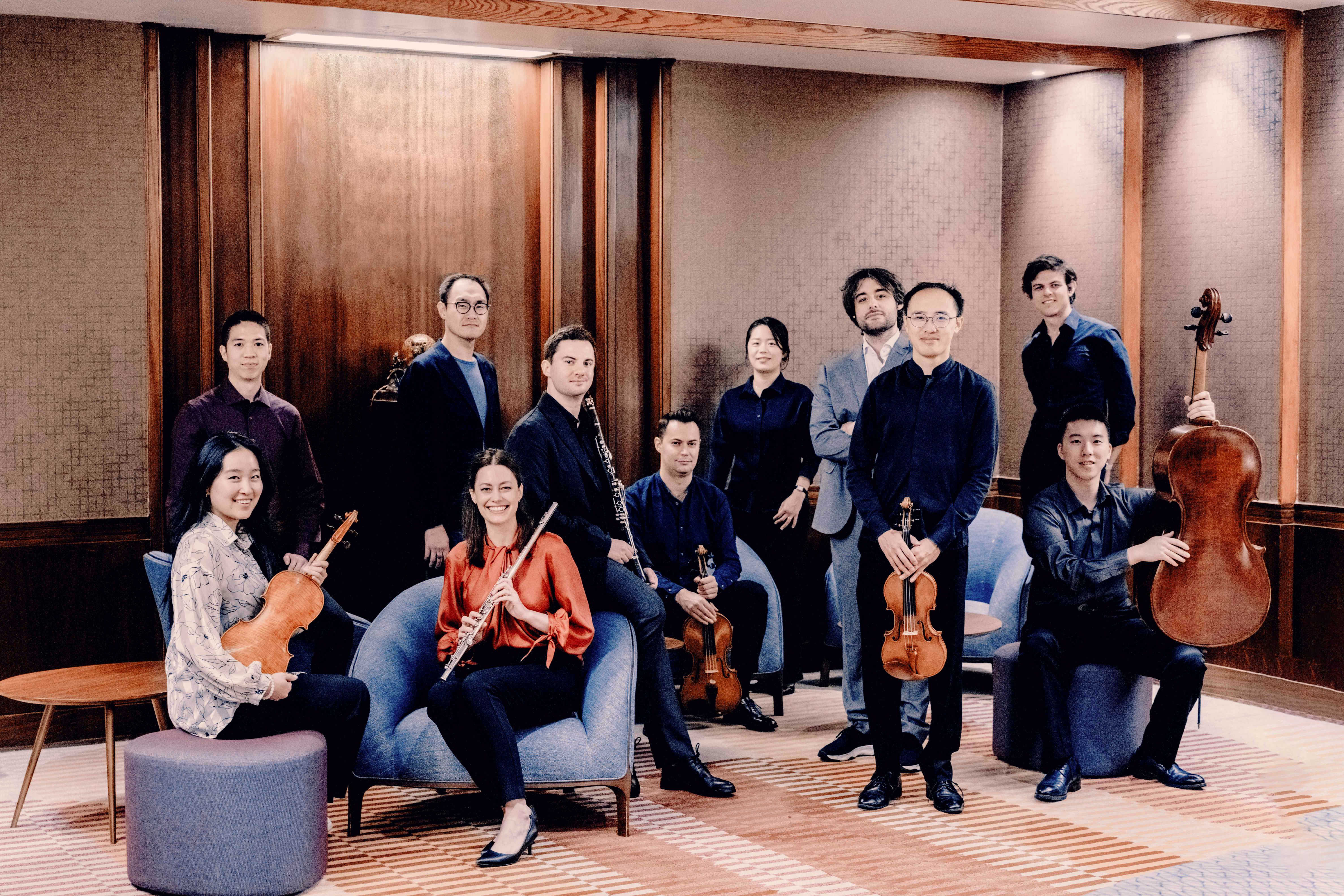 Until 2025, Soundbox’s programming was divided into two separate entities—a public-facing concert program, Listen Hear salon concerts, and the Suncoast Composer Fellowship Program, which nurtured the growth of emerging composers from around the world. For Soundbox Ventures’ 2025-26 season, the organization consolidated the two offerings into one new initiative, the Soundbox Fellowship Program (SFP). Tan decided to divide the SFP into three multi-day mini-festivals in late December 2025, April 2026 and July 2026. Each of these festivals includes concerts, seminars, composer workshops and rehearsals that are open to the public
and recording sessions.
From December 29 to January 2, for instance, the mini-festival included an open rehearsal of works presented in the January 2 concert program, New Year, New Spirits, open workshops of newly composed works from students within the Fellowship Program and a lecture from faculty composer Sean Friar. For Tan and the team at Soundbox Ventures, these open composer workshops are at the heart of what they do. At the workshops, emerging composers are given their recently composed works a “second voice,” pairing their music with Soundbox’s elite resident musicians, resulting in a high-quality recording of their music to add to their portfolios. “We believe that music is something that we do—making music is a joyful process of discovery,” says Tan. “There is a lot of hidden meaning in the way
that performers move or the way that they approach their instrument, and we live in a world that is so specialized that sometimes composers don’t quite know what that means. Every artist in our workshops will be working closely with the composer to try and find that meaning.” So much of classical music that is typically programmed—think Mozart, Haydn, Brahms, etc—are remnants of a past era, written by composers no longer on this earth. While works such as Beethoven’s Symphony No. 5 are cornerstones of Western music, there is something undoubtedly special about having access to a living composer. “Sometimes we forget how wonderful it is to be able to talk to somebody who knows what they want, or to help them to help shape or even specify what it is that they’re trying to capture with the stroke of a pen,” states Tan. “Composing is a very quiet, yet strong form of expression. Nurturing that expression is at the core of our workshop program.”
SFP’s second mini-festival, from April 10-12, pairs those open composer workshops with the presentation of a concert program, Hearing Memory, with oboist James Austin Smith. Inspired by the emergence of avant-garde classical music and composition in East Germany, Hearing Memory employs music, documentary interviews and storytelling to shine a light on a bygone era of music. “This was a very fascinating topic to him, because it encapsulates a sort of culture that has now been lost since Germany was reunified. Smith’s program will include works by many people who lived in the society of oppression and experimented with new music in a way to sort of either acts of resistance or to seek solace,” says Tan. “It’s this idea of music, not just as something beautiful, but as something that bears witness to history.”
Although programming for SFP’s third mini-festival, coming in July, is still in the works, Soundbox Ventures has launched a satellite program in Shanghai, China that will be nurturing composers and performers alike this August. It’s part of Tan’s efforts to understand that “something else” about music, the medium’s innate ability to transcend time and space, connecting us all to one another.
“In terms of music’s significance in the time that we live in now, I believe that people are looking for truth and specificity and that they want to communicate. There is something very heartening about understanding someone else so deeply that even words are not enough to convey their feelings,” says Tan. “We think that it is everyone’s right to experience that joy or that freedom through music.”